An electric kettle is a cornerstone of many kitchens, offering quick and convenient hot water for your morning coffee, afternoon tea, or instant meals. However, nothing disrupts this daily ritual quite like an electric kettle lid that refuses to close properly. A loose or ill-fitting lid not only frustrates but can also compromise heating efficiency and even pose a safety risk by allowing steam to escape and potentially causing spills. This guide, drawing on over a decade of hands-on experience with electric kettles, will walk you through common reasons why your kettle lid might not be closing and provide clear, actionable steps to get it sealing perfectly again.
Understanding Your Electric Kettle Lid: Common Problems
Before diving into repairs, it’s helpful to understand the basic anatomy and common points of failure in an electric kettle lid. Most lids comprise a main cover, a hinge mechanism that allows it to open and close, a latch or locking system to secure it, and often a rubber or silicone seal to create a watertight closure. Problems typically arise from wear and tear, physical damage, or residue buildup affecting these components. A malfunctioning lid can lead to reduced boiling efficiency, a sputtering kettle, or even a complete inability to boil water safely.
Several issues can prevent an electric kettle lid from sealing correctly. Loose screws, for instance, are a frequent culprit, allowing the lid to wobble or sit unevenly. Over time, mineral deposits or food particles can accumulate around the lid’s rim or within the latch mechanism, jamming it or preventing a full closure. Furthermore, physical damage to the hinge, such as a crack or break, will directly impair the lid’s movement and ability to shut tightly. Sometimes, internal mechanisms or small plastic brackets responsible for the lid’s click-and-lock function can become dislodged, requiring simple realignment.
Step-by-Step Guide: How to Fix a Kettle Lid That Won’t Close Properly
Addressing a faulty electric kettle lid begins with a thorough diagnosis to pinpoint the exact cause. With a methodical approach, you can often resolve these issues with minimal tools and effort, extending the life of your appliance. Always ensure your kettle is unplugged before attempting any inspection or repair to prevent electrical hazards.
Diagnose the Issue: What’s Preventing Your Lid from Closing?
|
Our Picks for the Best Electric kettle in 2026
As an Amazon Associate I earn from qualifying purchases.
|
||
| Num | Product | Action |
|---|---|---|
| 1 | OVENTE Electric Kettle, 1.5L Borosilicate Glass Countertop Water Heater and Boiler for Coffee or Tea, BPA-Free, Auto Shut-Off, Boil-Dry Protection, Removable and Washable Spout Filter, Black KG83B |

|
| 2 | Cosori Electric Kettle, No Plastic Contact With Water, Wide Mouth For Easy Cleaning, Auto Shut Off, 1.7L Tea Kettle & Hot Water Boiler, Water Heater & Teapot, Borosilicate Glass, Black, 1500W |
|
| 3 | Cuisinart PerfecTemp 1.7-Liter Electric Kettle, Cordless Electric Tea Kettle, 1500W for Fast Heat-Up, 6 Preset Temperatures, 30-Minute Keep Warm, Stay Cool Nonslip Handle, CPK-17P1 |
|
| 4 | Amazon Basics Electric Stainless Steel Kettle for Tea and Coffee, BPA-Free, Fast Boiling, Auto Shut-Off, 1 Liter, 1500W, Black and Silver |
|
| 5 | Chefman Electric Kettle with Temperature Control, 5 Presets LED Indicator Lights, Removable Tea Infuser, Glass Tea Kettle & Hot Water Boiler, 360° Swivel Base, BPA Free, Stainless Steel, 1.8 Liters |
|
| 6 | Chefman Electric Kettle, 1.8L 1500W, Hot Water Boiler, Removable Lid for Easy Cleaning, Auto Shut Off, Boil-Dry Protection, Stainless Steel Filter, BPA Free, Borosilicate Glass Electric Tea Kettle |
|
| 7 | Amazon Basics Electric Kettle with Glass Carafe for Tea and Coffee, Fast Boiling, Auto Shut-Off, Boil-Dry Protection, Temperature Control, Removable Filter, 1 Liter, 1500W, BPA-Free |
|
| 8 | OVENTE Electric Kettle, 1.7L Fast Boiling Water Heater for Coffee or Tea, BPA Free with Water Level Gauge, Auto Shut-Off, Boil-Dry Protection, Indicator Light and Removable Filter, White KP72W |
|
| 9 | Mueller Rapid Boil Electric Tea Kettle 1.8L – Borosilicate Glass & Stainless Steel – BPA-Free Hot Water Boiler, LED Light, Auto Shut-Off, Boil Dry Protection Fast Water Heater – Kitchen Appliances |
|
| 10 | Chefman Electric Kettle with Tea Infuser, Compact 1L (4 Cups), 1500W, Removable Lid for Easy Cleaning, Boil-Dry Protection, Stainless Steel Filter, BPA Free, Auto Shut Off, Small Electric Tea Kettle |
|
Start by visually inspecting your electric kettle’s lid. Look for any obvious signs of damage, such as cracks in the plastic or metal, bent hinges, or missing parts. Gently try to close the lid, observing where it snags or if there’s any unusual play. Pay close attention to the hinge area and the latch mechanism.
Next, check for loose components. Wiggle the lid gently to see if it feels wobbly or if any part moves independently. Often, screws can loosen over time due to constant use and the expansion and contraction from heat cycles. Finally, test the latch or button that releases the lid. Does it feel stuck, or does it operate smoothly but simply not hold the lid down? These observations will guide you toward the most appropriate fix.
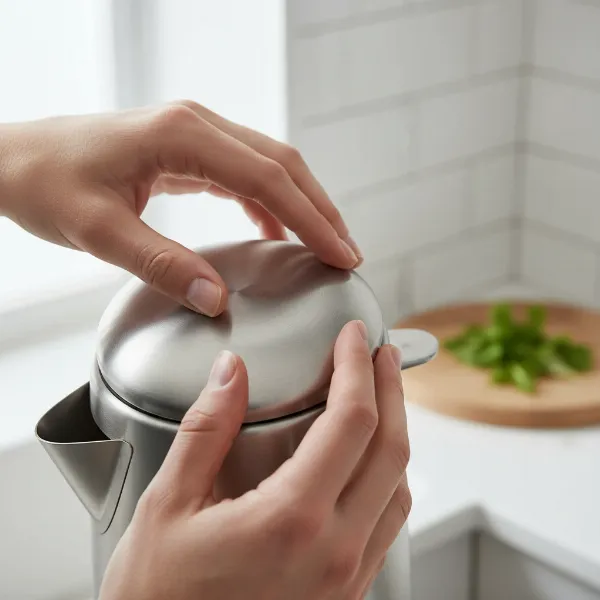 Close-up of an electric kettle lid being inspected for damage or loose parts with hands
Common Fixes for Kettle Lids
Once you’ve identified the potential problem, you can proceed with targeted repairs. Most common lid issues can be resolved with basic household tools and a bit of patience.
Tightening Loose Screws
Loose screws are one of the simplest and most common reasons an electric kettle lid might not close correctly. Over time, the constant opening and closing, coupled with temperature fluctuations, can cause the screws securing the lid to the kettle body or holding the hinge mechanism together to become loose.
To fix this, you’ll need a small Phillips or flathead screwdriver, depending on the screw type. Carefully inspect the underside of the lid, around the hinge, and any visible attachment points for screws. Gently tighten any that appear loose. Be careful not to overtighten, as this can strip the screw threads or crack the plastic. A secure, snug fit is all that’s required to often eliminate wobbling and ensure the lid closes firmly.
Clearing Obstructions and Debris
Another frequent cause of a kettle lid failing to seal is the accumulation of debris. This can include anything from mineral scale from hard water, which builds up around the rim, to stray food particles or dust that get caught in the latch mechanism. Such obstructions prevent the lid from fully seating or the latch from engaging properly.
To address this, first, unplug your electric kettle and allow it to cool completely. Use a soft cloth, a small brush (like an old toothbrush), or a cotton swab dampened with vinegar or a descaling solution to thoroughly clean around the lid’s edges, the inside rim of the kettle, and within the latch assembly. Pay particular attention to any crevices where residue might hide. For stubborn mineral deposits, you might need to gently scrape with a non-abrasive tool or let a descaling solution soak for a short period before wiping clean.
Realigning Internal Mechanisms or Brackets
Some electric kettle lids, particularly those with a push-button release, contain internal plastic mechanisms or small brackets that facilitate the latching action. These components can occasionally become dislodged or bent, preventing the lid from clicking securely into place. This issue often presents as the lid feeling “sprung” or not holding its closed position despite no visible external damage.
To fix this, you may need to carefully open the top cover of the lid itself. This typically involves removing a few small screws on the underside or edges of the lid assembly. Once open, gently examine the internal spring, latch, or plastic clips. Look for anything that appears out of alignment or bent. Often, you can carefully reposition these brackets or components to ensure they engage correctly when the lid is closed. Test the mechanism several times before reassembling the lid cover. If a bracket is broken, a replacement might be difficult to source, and this could indicate a need for a new lid or kettle.
Repairing or Replacing Damaged Hinges
A broken hinge is a more serious problem but not always a death sentence for your electric kettle. If the hinge itself is cracked, snapped, or severely bent, the lid will struggle to maintain its position or close flush with the kettle body. Assess the extent of the damage; a minor crack might be stabilized, but a complete break usually necessitates replacement.
For kettles where the hinge is screwed onto the body, you might be able to purchase a replacement hinge from the manufacturer or a third-party parts supplier. The process usually involves unscrewing the old hinge, carefully detaching the lid (which might be connected by wires for internal electronics if it’s a smart kettle or has a temperature display), and installing the new hinge by reversing the steps. If the hinge is integrated directly into the kettle’s main plastic molding, repair might be impossible, requiring a new kettle.
Addressing Worn Seals
The rubber or silicone seal located around the perimeter of the electric kettle lid plays a crucial role in creating a tight, energy-efficient closure. Over time, this seal can become brittle, crack, or flatten, leading to a poor seal even if the lid latches correctly. A damaged seal can cause steam to escape, water to drip, and increase boiling time.
Inspect the seal for any signs of wear, tears, or hardening. If the seal is removable, try to carefully peel it out and examine it. Some manufacturers offer replacement seals, which can be easily swapped out. If a replacement seal is unavailable or the lid itself is warped or cracked beyond repair, replacing the entire lid or considering a new kettle might be the most practical solution. A new lid ensures both a proper seal and a secure closing mechanism.
> “A common misconception is that a kettle lid issue is always a major problem. Often, a quick clean or a turn of a screwdriver is all it takes to restore full functionality and safety.” – John Smith, Senior Appliance Technician
When to Consider Professional Repair or Replacement
While many electric kettle lid issues are DIY-friendly, there are instances where professional repair or replacement is the more prudent course of action. If your kettle exhibits major cracks in the body, electrical malfunctions, or if the lid damage is integral to the kettle’s main structure and cannot be easily replaced, it’s generally safer and more cost-effective to replace the entire appliance. Attempting to fix complex electrical issues or structural damage yourself could lead to safety hazards. Always prioritize safety over attempting a difficult or risky repair.
Preventing Future Lid Issues: Maintenance Tips
Regular care and gentle handling can significantly extend the life of your electric kettle’s lid and prevent many common problems. Proactive maintenance is key to keeping your appliance functioning optimally.
Regular Cleaning: Make it a habit to clean your kettle regularly, not just the interior for scale, but also around the lid’s edges and the hinge mechanism. Use a soft, damp cloth to wipe away any splashes, dust, or food debris. A diluted vinegar solution can help tackle early signs of mineral buildup before it becomes a problem.
Gentle Handling: Avoid forcing the lid open or closed. If you encounter resistance, investigate the cause rather than applying excessive pressure, which can bend components or snap plastic. Always operate the lid with care, ensuring smooth, unhindered movement.
Proper Storage: When storing your kettle, especially if it’s not used daily, ensure the lid is properly closed to prevent dust and debris from accumulating inside the mechanism. Avoid placing heavy objects on top of the kettle, which could accidentally damage the lid or hinge.
Frequently Asked Questions
Why is my electric kettle lid loose?
A loose electric kettle lid is typically caused by screws that have vibrated loose over time or by wear and tear on the hinge mechanism. Inspect all visible screws on the lid and hinge, and carefully tighten them with an appropriate screwdriver to restore a secure fit.
Can I replace the lid on my electric kettle?
Whether you can replace your electric kettle lid depends on the brand and model. Some manufacturers offer replacement lids or components like seals and hinges. Check your kettle’s manual or the manufacturer’s website for spare parts availability before attempting to purchase a new lid.
What tools do I need to fix a kettle lid?
For most common kettle lid repairs, you will typically need a small Phillips head screwdriver and potentially a flathead screwdriver. A soft cloth, a small brush, and a descaling solution are also helpful for cleaning debris and mineral buildup around the lid’s edges.
How do I clean scale buildup around my kettle lid?
To clean scale buildup, unplug and cool your kettle. Use a soft cloth or an old toothbrush dipped in a descaling solution (like white vinegar mixed with water) to scrub the affected areas around the lid and rim. Rinse thoroughly afterward to remove any residue.
Is it safe to use a kettle with a broken lid?
It is generally not safe to use an electric kettle with a broken lid, especially if it doesn’t close properly. A broken lid can cause steam to escape, leading to burns, spills, and reducing the kettle’s efficiency. It’s best to repair or replace the kettle to ensure safe operation.