Our electric kettles are indispensable allies in the kitchen, offering the comforting ritual of tea or coffee, and quick hot water for countless tasks. But what happens when these trusty appliances reach the end of their boiling days? A broken electric kettle, with its intricate blend of plastics, metals, and electrical components, is more than just household trash. Improper disposal can lead to significant environmental harm and resource waste. This guide will walk you through the essential steps and diverse options for recycling your old, broken electric kettle, ensuring it contributes to a sustainable future rather than a growing landfill. We’ll explore why proper disposal is crucial, how to prepare your kettle for its next life, and the various avenues available for responsible recycling.
The Environmental Impact of Improper Kettle Disposal
An electric kettle might seem like a simple appliance, but its components tell a different story. These devices are classified as Waste Electrical and Electronic Equipment (WEEE) because they contain a mix of materials, some of which can be hazardous if not handled correctly. When an electric kettle is carelessly thrown into general waste, it ends up in a landfill. Here, the various plastics, metals, and wiring can slowly degrade, potentially leaching harmful substances like lead, mercury, or cadmium into the soil and groundwater. These toxins pose a serious risk to ecosystems and human health.
Beyond contamination, improper disposal represents a colossal waste of valuable resources. Metals such as copper, aluminum, and stainless steel, along with various plastics, are all recoverable and can be given a new life through recycling. Failing to recycle means we continually extract new raw materials from the Earth, a process that consumes significant energy and contributes to habitat destruction. Moreover, many modern electrical appliances contain small, hidden batteries (even if not immediately obvious) that can pose a fire hazard when compacted in waste collection vehicles or recycling facilities. Choosing to recycle your electric kettle helps mitigate these risks, conserves precious resources, and reduces your environmental footprint.
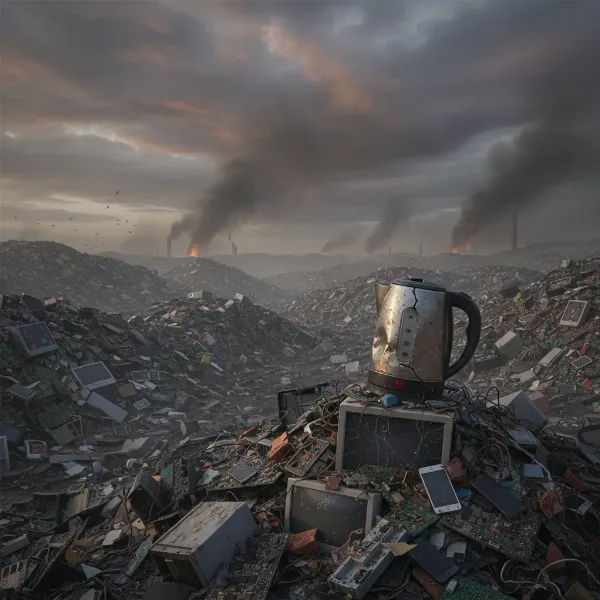 Illustration showing an old, broken electric kettle discarded in a vast landfill, with dark, harmful fumes rising, emphasizing environmental damage.
Understanding WEEE: Your Kettle’s End-of-Life Journey
The term WEEE, or Waste Electrical and Electronic Equipment, is a crucial concept in responsible appliance disposal. It refers to any discarded item that uses electricity, from large refrigerators to small household items like your electric kettle. The widespread presence of the crossed-out wheeled bin symbol on electrical products serves as a clear reminder: these items should not be disposed of with your regular household rubbish. This symbol indicates that the product contains electrical components and must be processed through specialized recycling channels.
Electric kettles, regardless of their exterior material—be it stainless steel, glass, or plastic—all house internal electrical elements, heating coils, and wiring. These diverse components require specific methods for separation and recovery. For instance, the metal elements can be melted down and reused, while plastics can be granulated and remolded. Even the wiring contains valuable copper that can be extracted. Recycling facilities equipped to handle WEEE are designed to safely dismantle these complex items, separate their constituent materials, and prepare them for reprocessing. This meticulous process ensures that valuable materials are reclaimed and hazardous substances are managed responsibly, preventing them from entering the environment.
When to Repair, Reuse, or Recycle Your Electric Kettle
Before you decide to recycle your electric kettle, it’s worth considering if it can be given a second life through repair or reuse. Not every malfunction signals the end.
Troubleshooting Common Issues
|
Our Picks for the Best Electric kettle in 2026
As an Amazon Associate I earn from qualifying purchases.
|
||
| Num | Product | Action |
|---|---|---|
| 1 | Chefman Electric Kettle, 1.8L 1500W, Hot Water Boiler, Removable Lid for Easy Cleaning, Auto Shut Off, Boil-Dry Protection, Stainless Steel Filter, BPA Free, Borosilicate Glass Electric Tea Kettle |

|
| 2 | Chefman Electric Kettle with Temperature Control, 5 Presets LED Indicator Lights, Removable Tea Infuser, Glass Tea Kettle & Hot Water Boiler, 360° Swivel Base, BPA Free, Stainless Steel, 1.8 Liters |
|
| 3 | Amazon Basics Electric Kettle with Glass Carafe for Tea and Coffee, Fast Boiling, Auto Shut-Off, Boil-Dry Protection, Temperature Control, Removable Filter, 1 Liter, 1500W, BPA-Free |
|
| 4 | OVENTE Electric Kettle, 1.5L Borosilicate Glass Countertop Water Heater and Boiler for Coffee or Tea, BPA-Free, Auto Shut-Off, Boil-Dry Protection, Removable and Washable Spout Filter, Black KG83B |
|
| 5 | Chefman Electric Kettle with Tea Infuser, Compact 1L (4 Cups), 1500W, Removable Lid for Easy Cleaning, Boil-Dry Protection, Stainless Steel Filter, BPA Free, Auto Shut Off, Small Electric Tea Kettle |
|
| 6 | Mueller Rapid Boil Electric Tea Kettle 1.8L – Borosilicate Glass & Stainless Steel – BPA-Free Hot Water Boiler, LED Light, Auto Shut-Off, Boil Dry Protection Fast Water Heater – Kitchen Appliances |
|
| 7 | Amazon Basics Electric Stainless Steel Kettle for Tea and Coffee, BPA-Free, Fast Boiling, Auto Shut-Off, 1 Liter, 1500W, Black and Silver |
|
| 8 | OVENTE Electric Kettle, 1.7L Fast Boiling Water Heater for Coffee or Tea, BPA Free with Water Level Gauge, Auto Shut-Off, Boil-Dry Protection, Indicator Light and Removable Filter, White KP72W |
|
| 9 | Cuisinart PerfecTemp 1.7-Liter Electric Kettle, Cordless Electric Tea Kettle, 1500W for Fast Heat-Up, 6 Preset Temperatures, 30-Minute Keep Warm, Stay Cool Nonslip Handle, CPK-17P1 |
|
| 10 | Cosori Electric Kettle, No Plastic Contact With Water, Wide Mouth For Easy Cleaning, Auto Shut Off, 1.7L Tea Kettle & Hot Water Boiler, Water Heater & Teapot, Borosilicate Glass, Black, 1500W |
|
Sometimes, an electric kettle might appear broken but only has a minor issue. For instance, a kettle might stop heating due to mineral buildup (limescale) on the heating element. Regular descaling can often resolve this, restoring its function. Similarly, a loose power cord connection or a faulty switch might be repairable by a qualified technician, extending the kettle’s lifespan. However, certain problems, such as a burnt-out heating element, severe internal electrical failure, a cracked glass body, or extensive corrosion, are typically non-repairable and indicate that the kettle has truly reached the end of its functional life. Understanding these distinctions helps you make an informed choice between repair and recycling, saving money and reducing waste.
Donation and Resale
If your electric kettle is still in good working condition but you no longer need it, consider donating or selling it. Many charities and second-hand stores accept functional appliances, providing affordable options for others while diverting items from landfills. Online marketplaces and community groups also offer avenues for selling or giving away used appliances. However, it’s crucial not to donate broken items, as charities often incur costs for disposing of non-functional goods, which can strain their resources. Always ensure the kettle is fully functional and safe before offering it for reuse.
The Decision to Recycle
When a kettle is genuinely broken beyond economical repair or safe use, recycling becomes the most responsible choice. This applies to kettles with irreparable electrical faults, severely damaged bodies, or those that repeatedly malfunction. Once you’ve determined that repair or reuse isn’t an option, the next step is to prepare it for recycling, ensuring it enters the correct waste stream.
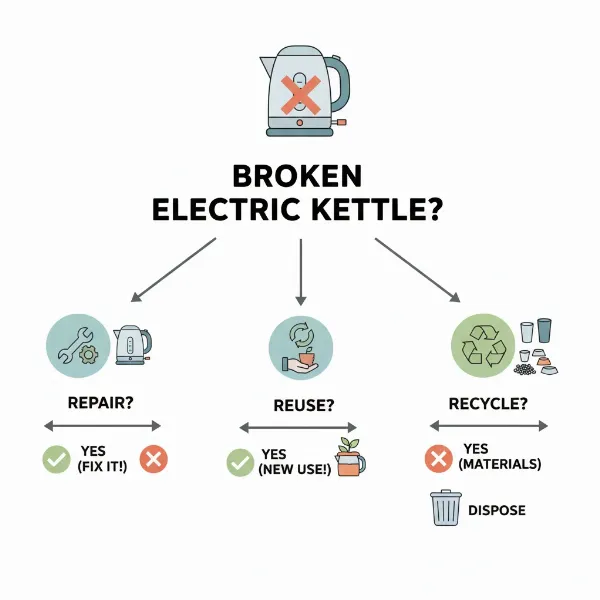 Infographic-style image with three distinct paths: a wrench icon for "Repair," a hand holding a kettle for "Reuse/Donate," and a recycling symbol for "Recycle," all stemming from a broken electric kettle.
Preparing Your Electric Kettle for Safe Recycling
Before dropping off your electric kettle at a recycling facility or leaving it for collection, a few simple preparatory steps are essential to ensure safety and streamline the recycling process. This careful preparation protects both you and the recycling workers, as well as preventing contamination.
Safety First: Unplugging, Cooling, Emptying, and Drying
The very first and most crucial step is to ensure the kettle is completely safe to handle. Always unplug the electric kettle from its power source. If it has been recently used, allow it to cool down completely to prevent any burns. Next, empty any remaining water from the kettle and wipe the interior dry. This prevents any water from potentially interacting with electrical components during transport or at the recycling facility, which could pose a safety hazard. These simple actions ensure the kettle is inert and ready for its journey to a recycling center.
Handling Damaged Components
If your kettle has specific damage, such as a cracked glass body or exposed wiring, take extra precautions. For glass kettles, carefully wrap the broken areas in thick newspaper or a towel to prevent injury during handling and transport. While you generally shouldn’t dismantle the kettle yourself (as specialized facilities are equipped for this), removing any easily detachable parts like a detachable base or lid, if your local recycling program allows, can sometimes aid the process. However, the primary goal is safe containment until it reaches the proper recycling point. Never attempt to cut or tamper with the electrical cord or internal components, as this can be dangerous.
Navigating Recycling Options for Electric Kettles
Finding the right place to recycle your electric kettle is easier than you might think, thanks to a variety of accessible options. Most regions have established networks for managing e-waste, which includes small household appliances like kettles. Knowing these options empowers you to make a responsible choice.
Local Recycling Centers
Your local household waste and recycling centers, often known as HWRCs, municipal electronic waste recycling centers, or civic amenity sites (especially in the UK and Europe), are primary destinations for e-waste. These facilities are equipped to handle a wide range of electrical items and have dedicated bins or areas for appliances. A quick search for “e-waste recycling near me” or checking your local council’s website will typically provide addresses, operating hours, and any specific drop-off instructions. These centers play a vital role in separating materials for proper processing.
Curbside Collection Programs
Depending on where you live, your local council or municipality might offer a curbside collection service for electricals. This can be part of your regular waste collection, or it might require a special arrangement or specific collection days for larger electrical items. It’s always best to check your local authority’s waste management guidelines or website for details on what they collect and how to prepare items for pick-up. This convenient option ensures your kettle is collected directly from your home, simplifying the disposal process.
Retailer Take-Back Schemes
Many major electronics and appliance retailers have programs that allow you to bring back old electrical items for recycling, particularly when you are purchasing a new replacement. Companies like Best Buy, The Home Depot, and Currys (in the UK) are known to offer such schemes. This is a convenient option, as you can often recycle your old kettle when you’re already at the store buying a new one. Some retailers might even accept appliances regardless of where they were originally purchased. It’s advisable to inquire about their specific take-back policy when buying a new kettle.
Special Recycling Events & Banks
Beyond regular facilities, you might find special recycling banks or community-organized e-waste events in your area. Recycling banks, often found in supermarket car parks, community centers, or on high streets, provide convenient drop-off points for small electrical appliances. Community recycling events are periodically held to encourage responsible disposal and collect a wide variety of e-waste from residents. Keep an eye on local news, community boards, or council announcements for information on these temporary or specialized collection points.
Manufacturer Programs
While less common for small appliances, some manufacturers offer their own take-back or recycling programs. This is more prevalent for larger electronics or specialized equipment, but it’s worth checking the manufacturer’s website or contacting their customer service for information, especially if your kettle is from a premium brand that emphasizes sustainability. These programs ensure that products are recycled according to the company’s environmental standards.
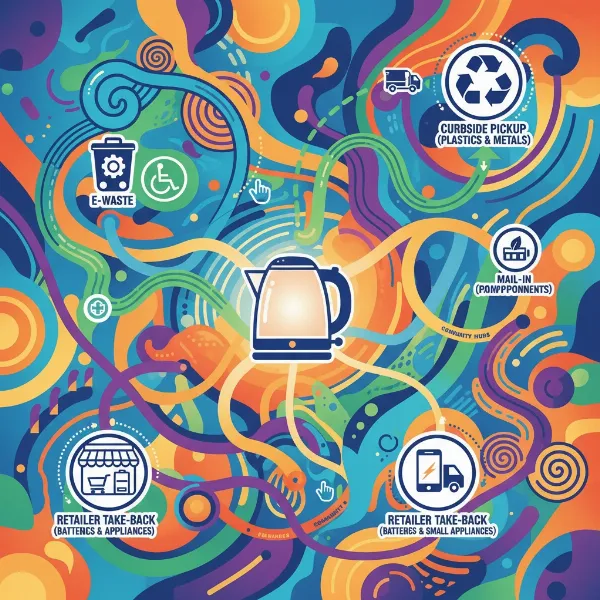 A colorful map with pins indicating different recycling locations: a recycling center, a store, and a community drop-off point, all connected by dotted lines.
The Evolution of Electric Kettles and Recyclability
The humble electric kettle has undergone significant transformations since its inception. Early models, appearing in the late 19th and early 20th centuries, were often simple metal containers heated by an external electric coil. As technology advanced, internal heating elements, automatic shut-off features, and faster boiling times became standard. These historical shifts in design and functionality have directly impacted the materials used and, consequently, the recyclability of kettles.
Modern electric kettles utilize a wider array of materials, including various grades of stainless steel, heat-resistant plastics, and borosilicate glass. While these materials offer benefits like durability, insulation, and aesthetic appeal, they also present different challenges for recycling. Stainless steel is highly recyclable, but the presence of plastic handles, lids, and internal components requires careful separation. Glass kettles need to be handled to manage breakage and ensure the glass is pure enough for recycling. The increasing complexity of electronic controls, such as those found in temperature-controlled or smart kettles, also adds to the intricacy of end-of-life processing. Recognizing this evolution helps us appreciate the growing importance of responsible recycling practices that keep pace with technological advancements in appliance manufacturing.
The Future of Sustainable Appliance Disposal
As consumers, our awareness and actions are pivotal in shaping the future of sustainable appliance disposal. The shift towards a circular economy, where products are designed for longevity, repairability, and ultimate recyclability, is gaining momentum. This vision extends beyond just kettles to all consumer electronics and appliances.
One key aspect is Extended Producer Responsibility (EPR), a policy approach where manufacturers are held accountable for the entire lifecycle of their products, including their disposal. This encourages companies to design products that are easier to recycle, use fewer hazardous materials, and incorporate recycled content. Innovations in recycling technologies are also constantly evolving, making it possible to recover more materials more efficiently. For example, advanced sorting techniques can better separate mixed plastics and metals, maximizing resource recovery. As consumers, our role involves making informed purchasing decisions, opting for durable products, and actively participating in recycling programs. By doing so, we contribute to a system where old electric kettles, instead of becoming waste, serve as valuable resources for the next generation of products, closing the loop on consumption and waste.
Conclusion
The journey of your electric kettle doesn’t have to end in a landfill. By understanding that these essential kitchen appliances are classified as e-waste, we can make conscious choices to recycle them responsibly. From your local household waste and recycling centers to convenient curbside collections and even retailer take-back schemes, there are numerous accessible avenues to ensure your broken kettle contributes to a more sustainable future. Taking a few simple steps to prepare your kettle safely, such as unplugging and drying it, is all it takes to make a significant positive impact.
Embracing proper electric kettle recycling practices not only conserves valuable natural resources and reduces pollution but also supports the broader movement towards a circular economy. Let’s all commit to being part of the solution, ensuring our used appliances are given a new life. What small step will you take today to make a difference in how you manage your electronic waste?
Frequently Asked Questions
Can I throw my electric kettle in the regular trash?
No, electric kettles should not be disposed of in regular household trash. They contain electrical components, metals, and plastics that are considered e-waste (WEEE) and must be recycled through specialized channels to prevent environmental harm and recover valuable materials.
Do all parts of an electric kettle get recycled?
Specialized e-waste recycling facilities are designed to separate and recover various materials from electric kettles, including metals (like stainless steel, copper), plastics, and wiring. While the goal is to recycle as much as possible, the exact percentage can depend on the kettle’s design and the recycling technology used.
What does the crossed-out wheelie bin symbol mean?
The crossed-out wheeled bin symbol, found on electric kettles and other electrical products, indicates that the item should not be put into general household waste. It signifies that the product is WEEE and must be disposed of via designated e-waste recycling programs.
Are there any fees for recycling electric kettles?
Often, recycling electric kettles at local household waste and recycling centers or through retailer take-back schemes is free of charge. Some specific e-waste collection services or events might have a small fee, but many public and commercial options aim to make recycling accessible and cost-free for consumers.
Can I recycle a kettle with a damaged cord?
Yes, electric kettles with damaged cords can and should still be recycled as e-waste. Ensure the kettle is unplugged and handled safely, especially if wires are exposed. The cord, like other components, will be processed to recover materials such as copper.