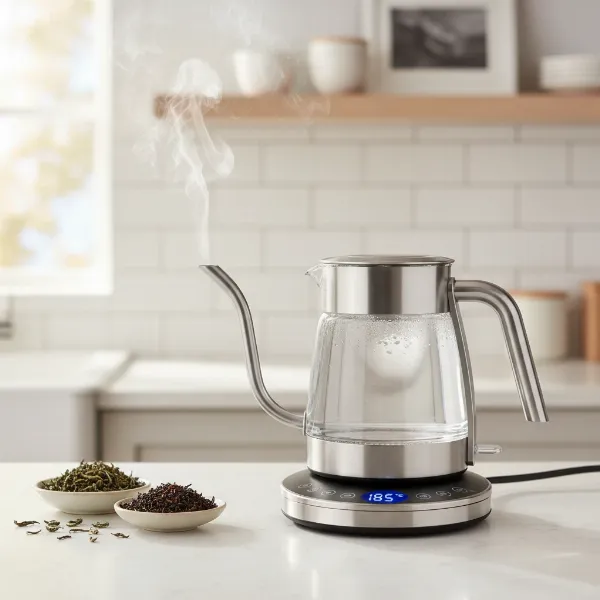
The siren song of instant noodles is hard to resist, especially when hunger strikes and time is short. For many, an electric kettle seems like the ultimate kitchen hack for a quick meal: boil water, toss in noodles, and voilà! Instant gratification. This desire for speed and convenience often leads people to consider cooking instant noodles directly in their electric kettle. While the idea might be tempting, it’s a practice fraught with hidden dangers, potential damage to your appliance, and hygiene concerns.
This article will pull back the curtain on why this popular “shortcut” is best avoided, reveal the serious risks involved, and most importantly, guide you through the correct, safe, and equally fast method for preparing your favorite instant noodles using an electric kettle, without compromising your health or your appliance.
The Allure of Kettle Cooking: Why the Temptation?
The appeal of using an electric kettle for more than just boiling water is undeniable, especially in certain living situations. Imagine a college dorm room, a small office pantry, or even a hotel room where a full kitchen setup is just a dream. An electric kettle, with its rapid heating capabilities, appears to be a versatile solution for more than just tea or coffee.
For many, it represents the ultimate in convenience and speed. The idea of dropping noodles into the kettle, adding water, and waiting a few minutes seems like a genius move to save time and washing up. This perceived simplicity and minimal equipment requirement make it a go-to thought for those craving a quick, hot meal without the hassle of pots, pans, and stovetops. However, this convenience often overshadows the critical design limitations of these appliances.
The Hidden Dangers: Why You Should Never Cook Noodles Directly in Your Kettle
Despite the tempting convenience, cooking instant noodles directly in an electric kettle is a practice that carries significant risks, impacting both the appliance itself and your personal safety. Electric kettles are specifically engineered for one purpose: boiling water. Introducing food items can lead to a cascade of problems that are often overlooked.
Damage to the Kettle
Table is empty.One of the primary concerns is the potential for irreversible damage to your electric kettle. Instant noodles, especially with their seasoning packets, contain starches, oils, and salts that are not meant to interact with the kettle’s internal components. The fine particles from noodles can clog the heating element, leading to uneven heating and a reduced lifespan for the appliance. Salt and acidic ingredients commonly found in seasoning can accelerate corrosion of the metal interior, potentially degrading its performance or even rendering it unusable. Boil-overs are another common issue; noodles can expand rapidly, causing water and food to erupt from the spout or lid, creating a messy and potentially dangerous situation. Furthermore, using your kettle for anything other than its intended purpose almost certainly voids its warranty, leaving you responsible for repair or replacement costs if something goes wrong.
Safety Hazards
Beyond appliance damage, cooking noodles directly in a kettle poses tangible safety hazards. When boil-overs occur, hot water and food can spill onto countertops or, worse, directly onto you, leading to serious burns. The presence of food particles can also interfere with the kettle’s automatic shut-off mechanism, causing it to overheat. This overheating can strain electrical components, increasing the risk of short circuits or even fire. Such incidents are not only dangerous but can also cause extensive property damage. Always remember that electrical appliances, especially those dealing with water and high heat, demand respect and adherence to their intended use.
Hygiene and Taste Issues
Even if you manage to avoid immediate damage or safety incidents, cooking food in your kettle introduces significant hygiene challenges. Food residues, especially sticky starches and oils from noodles, are incredibly difficult to clean thoroughly from the kettle’s intricate interior, particularly around the heating element and spout. This leftover residue can become a breeding ground for bacteria and mold if not meticulously removed, which is often impossible given the kettle’s design. Over time, these lingering food particles can impart unwanted odors and flavors to subsequent batches of boiled water, tainting your tea, coffee, or any other beverage you prepare. The convenience gained from this shortcut is quickly lost when your morning cup of coffee tastes faintly of yesterday’s ramen.
> “While the immediate allure of convenience is strong, the long-term consequences for your kettle’s integrity and your safety far outweigh any perceived benefit of cooking noodles directly inside it.” – Dr. Eleanor Vance, Culinary Appliance Safety Expert
The Smart and Safe Way: Using Your Kettle to Prepare Instant Noodles
While cooking noodles directly in your electric kettle is a definite no-go, your kettle is still an invaluable tool for preparing instant noodles safely and effectively. The key lies in understanding its function: an electric kettle is designed to boil water quickly and efficiently. By using it for its intended purpose and combining it with a few simple steps, you can enjoy your instant noodles without any of the associated risks.
Step-by-Step Guide to Kettle-Made Instant Noodles
- Boil Water in the Kettle: Fill your electric kettle with the required amount of water for your instant noodles, typically around 2 cups (500ml) per serving. Switch it on and let it come to a full, rolling boil.
- Prepare a Heat-Resistant Bowl or Mug: While the water is boiling, place your block of instant noodles into a separate heat-resistant bowl or a large mug. Ensure the container is robust enough to handle boiling water.
- Add Noodles and Seasoning to the Bowl: Open your instant noodle packet. Place the dried noodles into the bowl. If your noodles come with a seasoning packet (or oil packet), add it to the bowl before pouring the hot water. This allows the flavors to meld effectively as the noodles cook.
- Pour Boiling Water Over Noodles: Once the kettle automatically shuts off, carefully pour the freshly boiled water directly over the noodles in your prepared bowl. Make sure to fully submerge the noodles.
- Cover and Steep: To ensure even cooking and to keep the heat locked in, cover the bowl with a lid or a plate. Let the noodles steep for the time recommended on the noodle packaging, usually between 3 to 5 minutes. This allows the noodles to soften and cook through.
- Stir and Enjoy: After the recommended steeping time, remove the cover, give the noodles a good stir with a fork or chopsticks to evenly distribute the seasoning, and then enjoy your perfectly cooked, safe, and delicious instant noodles.
Why This Method is Best
This safe method ensures that your electric kettle remains pristine and functional for years to come, avoiding corrosion, residue buildup, and the dangers of electrical malfunction. Furthermore, it guarantees that your instant noodles taste as they should, free from any lingering flavors or questionable hygiene. It’s just as quick as the “direct cooking” method but significantly safer and more reliable.
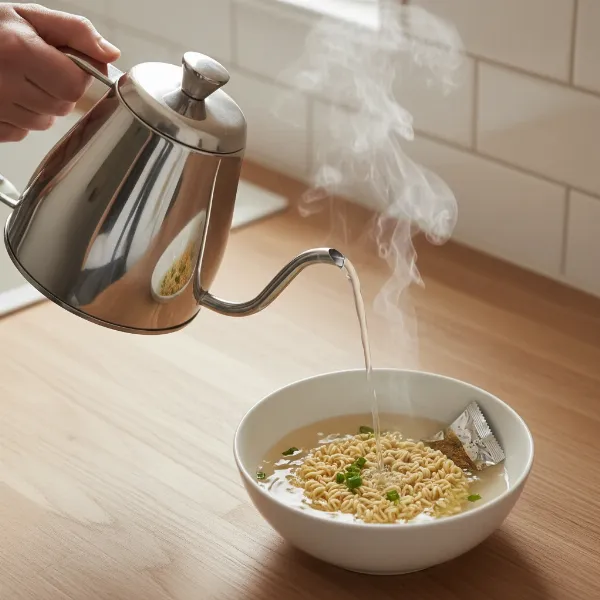 Person pouring boiling water from an electric kettle into a bowl of instant noodles
Elevating Your Kettle-Made Instant Noodles (The Right Way)
Making instant noodles doesn’t have to be a bland affair, even when using an electric kettle for the hot water. By incorporating a few extra steps and fresh ingredients, you can transform a simple packet of noodles into a more satisfying and nutritious meal.
Adding Fresh Ingredients
Once your noodles are steeping in the hot water (in the bowl, not the kettle!), consider adding a variety of fresh ingredients. This is an excellent way to boost flavor, texture, and nutritional value. Common additions include:
- Vegetables: A handful of spinach, chopped scallions, corn, frozen peas, or shredded carrots can be added directly to the bowl with the noodles to soften in the hot water.
- Protein: For a more substantial meal, consider adding a soft-boiled egg (cooked separately, if possible, or added raw to the very hot noodles and allowed to cook for a few extra minutes), leftover cooked chicken, tofu cubes, or even a slice of cheese.
- Herbs and Spices: Fresh cilantro, a dash of sesame oil, a squeeze of lime juice, or a sprinkle of chili flakes can significantly enhance the flavor profile.
Controlling Seasoning
Instant noodle seasoning packets are notoriously high in sodium. To make your meal healthier, try using only half or two-thirds of the seasoning packet. You can then adjust the flavor with your own herbs, spices, or a low-sodium broth base if you have one. This allows you to control the salt intake without sacrificing taste.
Experimenting with Flavors
Don’t be afraid to get creative! A splash of soy sauce, a spoonful of peanut butter for a satay-like flavor, or a dollop of chili garlic sauce can completely change the experience. Remember, the bowl is your canvas, and the kettle is simply your water boiler.
Maintaining Your Electric Kettle: Beyond Just Water
Proper maintenance is crucial for extending the life of your electric kettle and ensuring it remains safe and effective for its primary purpose: boiling water. Regular care prevents issues and preserves the quality of your hot beverages.
Regular Cleaning for Water-Boiling Use
Even when used only for water, kettles can accumulate mineral deposits, especially in areas with hard water. After each use, empty any remaining water and wipe the interior with a soft cloth. For a more thorough clean, occasionally fill the kettle with fresh water, bring it to a boil, and then discard the water to rinse away any loose particles or residues.
Descaling Tips
Limescale buildup is a common issue that can affect a kettle’s efficiency and taste. Descaling should be done regularly, depending on your water hardness.
- Vinegar Method: Fill the kettle with a mixture of equal parts white vinegar and water. Bring it to a boil and let it sit for 30 minutes to an hour (or longer for heavy buildup). Pour out the solution, rinse thoroughly, and boil fresh water several times to remove any vinegar smell.
- Citric Acid Method: Dissolve a tablespoon of citric acid powder in water, fill the kettle, boil, and let sit for 15-30 minutes before rinsing. Lemon juice can also be used similarly.
What to Do If You Accidentally Cooked Noodles
If, by some oversight, you’ve cooked noodles directly in your kettle, immediate action is necessary to minimize damage and ensure safety.
- Unplug and Cool: First and foremost, unplug the kettle and allow it to cool completely. Never attempt to clean a hot kettle.
- Remove Debris: Carefully scoop out any remaining noodles or large food particles.
- Gentle Cleaning: Fill the kettle with warm water and a small amount of mild dish soap. Let it sit for a few minutes to loosen any stuck-on residue. Use a non-abrasive sponge or cloth to gently scrub the interior, paying special attention to the heating element area. Never use steel wool or harsh scrubbers that can scratch the surface.
- Rinse Thoroughly: Rinse the kettle multiple times with clean water to ensure all soap and food residues are gone.
- Boil and Discard: Fill the kettle with fresh water and boil it. Discard this water to further clean and sanitize the interior, repeating if necessary until no odor or residue remains.
- Inspect: After cleaning, carefully inspect the heating element and interior for any signs of damage, corrosion, or persistent residue. If you notice any unusual discoloration, damage, or lingering smells, it might be safer to replace the kettle.
By treating your electric kettle with care and using it for its intended purpose, you ensure its longevity and your safety.
Conclusion
The thought of quickly cooking instant noodles directly in an electric kettle might seem like a clever hack for convenience, but as we’ve explored, this shortcut comes with a multitude of risks. From damaging your kettle’s heating element and compromising its hygiene to posing serious safety hazards like boil-overs and electrical faults, the drawbacks far outweigh any fleeting benefit. Electric kettles are precision appliances designed for one task: boiling water.
The smart, safe, and equally efficient way to enjoy your instant noodles is to use your kettle as a powerful water-boiling tool, then combine that perfectly heated water with your noodles in a separate, heat-resistant bowl. This not only preserves the life and integrity of your electric kettle but also ensures your meal is prepared hygienically and deliciously. So, next time hunger calls, remember to keep your kettle purely for water and your noodles for the bowl. Your kettle, and your taste buds, will thank you.
What clever and safe instant noodle upgrades have you discovered using your electric kettle?
Frequently Asked Questions
Can I boil anything other than water in an electric kettle?
No, electric kettles are specifically designed to boil water only. Boiling other liquids or food items can damage the heating element, cause residue buildup, lead to boil-overs, and void the product’s warranty. Stick to water for optimal safety and appliance longevity.
What happens if I put food in my electric kettle?
Putting food in your electric kettle can lead to several problems: food particles can clog or corrode the heating element, alter the taste of subsequent boiled water, make the kettle difficult to clean, and potentially cause dangerous boil-overs or electrical malfunctions due to improper operation.
How do I clean my kettle if I accidentally cooked noodles in it?
If you accidentally cooked noodles in your kettle, unplug it and let it cool completely. Carefully remove any large food debris. Fill the kettle with warm water and a mild dish soap, let it soak, then gently scrub the interior with a non-abrasive sponge. Rinse thoroughly multiple times, then boil and discard fresh water several times to eliminate any remaining residue or odor.
Are there electric kettles designed for cooking food?
While standard Electric Kettles are not for cooking food, there are specialized “electric multi-cookers” or “travel hot pots” available. These appliances are designed with different heating elements and larger capacities specifically for cooking various food items, including noodles, soups, and even rice. If you need an appliance for cooking, consider one of these multi-functional options instead of a traditional kettle.