The convenience of an electric kettle is undeniable, offering quick boiling water for everything from morning tea to instant meals. Yet, beneath their sleek design lies a potential hazard often overlooked: the boil-dry accident. As an expert with over a decade in kitchen appliance technology, I understand the critical importance of operating these devices safely to prevent damage, fire, and injury. This comprehensive guide provides crucial insights and actionable safety tips to ensure your electric kettle remains a helpful kitchen companion, not a hidden danger. We’ll delve into the mechanics of boil-dry protection, essential user practices, and what to look for when choosing a new, safe electric kettle.
The Silent Hazard: Understanding Electric Kettle Boil-Dry Accidents
What Exactly is a Boil-Dry Accident?
Table is empty.A boil-dry accident occurs when an electric kettle is switched on with insufficient water, or, worse, completely empty, causing its heating element to rapidly overheat. This scenario bypasses the normal boiling cycle, which relies on steam to trigger the automatic shut-off. Instead, the element continues to heat with no water to absorb the energy, leading to dangerously high internal temperatures.
The Potential Dangers of an Empty Kettle
Operating an empty or near-empty electric kettle poses significant risks. Without water to dissipate the heat, the internal components can reach temperatures exceeding 300°C. This extreme heat can melt plastic parts, damage the heating element, and, in severe cases, ignite surrounding flammable materials, leading to fires. Medical studies indicate that toxic gases may also be generated during these incidents, posing health risks. The structural integrity of the kettle itself can be compromised, leading to leaks or malfunction.
Common Reasons Why Kettles Boil Dry
Boil-dry accidents often stem from simple oversights. One common reason is accidentally switching the kettle on when it’s empty, perhaps after pouring out the last of the water and forgetting to refill it. Another scenario involves filling the kettle below the minimum water level, causing the small amount of water to evaporate before the automatic shut-off can activate. Distraction and rushing are often contributing factors, leading users to overlook these critical safety steps.
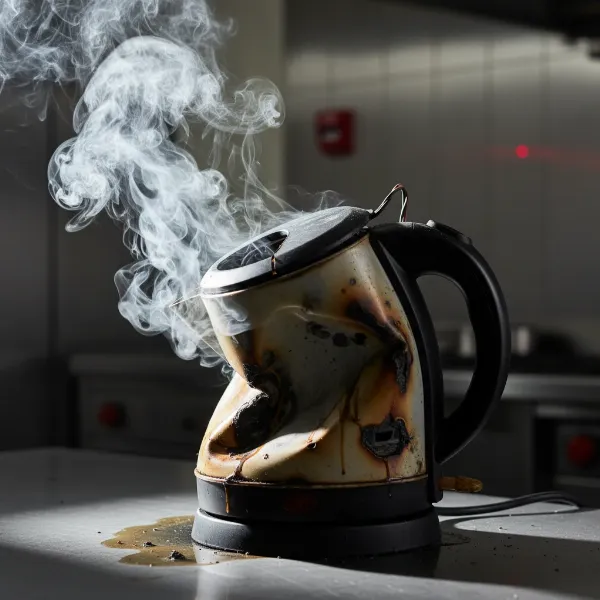 Electric kettle overheating with smoke, illustrating the danger of a boil-dry accident in a home kitchen setting, dramatic lighting
How Modern Electric Kettles Offer Protection
The Technology Behind Boil-Dry Protection
Modern electric kettles incorporate sophisticated technology to combat boil-dry scenarios. The primary mechanism is often a thermal cutoff device or a specialized thermostat designed to detect temperatures significantly above the normal boiling point of water (100°C). When a kettle boils dry, and the internal temperature exceeds approximately 110°C, this thermostat trips, automatically cutting off power to the heating element. This crucial safety feature prevents the kettle from sustaining prolonged, dangerous overheating.
Automatic Shut-Off and Overheat Safeguards
Beyond boil-dry protection, virtually all electric kettles feature an automatic shut-off that activates once water reaches a rolling boil. This system primarily relies on steam sensors that detect the vapor produced during boiling. Additionally, many kettles include a separate “overheat protection” that monitors the heating element’s temperature and shuts off the appliance if it detects abnormal heat, even if water is present, further enhancing safety and extending the kettle’s lifespan.
The Role of Temperature Control Features
Some advanced electric kettles come equipped with variable temperature control settings. While primarily designed for brewing different beverages at optimal temperatures, these features can indirectly contribute to safety. By allowing users to select a specific temperature below boiling, they reduce the overall energy consumption and the duration the heating element operates at maximum power, potentially mitigating the risk of component stress that could lead to malfunctions over time.
Essential Daily Safety Practices for Electric Kettle Use
Adopting mindful habits is paramount to preventing accidents and ensuring the safe operation of your electric kettle. Even with advanced safety features, user vigilance remains the first line of defense. Simple routines can drastically reduce risks, transforming a potentially hazardous appliance into a reliably safe one.
Adhering to Fill Lines: Minimum and Maximum
Always pay close attention to the water level indicators inside your electric kettle. Every kettle has clearly marked minimum and maximum fill lines. Filling below the minimum can lead to a boil-dry incident, as there isn’t enough water to trigger the automatic shut-off effectively, or the water evaporates too quickly. Overfilling, conversely, risks hot water boiling over, causing scalding injuries and potentially damaging electrical components if water spills into the base.
Never Boil Anything But Water
Electric kettles are designed exclusively for heating water. Introducing other liquids like milk, coffee, tea, or even food items can be highly dangerous. These substances can foam excessively, causing spills and potential burns, or interfere with the kettle’s boiling detection mechanisms, leading to malfunctions. Residues from non-water liquids can also adhere to the heating element, affecting its efficiency, promoting corrosion, and producing unusual odors.
Proper Placement and Cord Management
The placement of your electric kettle in the kitchen is critical. Always position it on a stable, flat, and non-slip surface, away from the edge of countertops where it could be accidentally knocked over. Ensure the power cord is kept out of the way, especially from children and pets, to prevent accidental tugging that could pull the hot kettle down. Avoid placing the kettle near gas stoves or other open flames, as the heat can melt plastic parts or cause ignition.
Unplugging and General Care
“Always unplug your electric kettle from the power outlet when it’s not in use, and particularly before cleaning.” This simple act eliminates any electrical hazard and prevents accidental activation. Regularly inspect the power cord for any signs of hardening, discoloration, or damage, and immediately discontinue use if you notice any issues. Keep the power plugs, sockets, and cords dry and clean; never wash them with water to avoid damaging electrical insulation.
Choosing an Electric Kettle with Advanced Safety Features
When selecting a new electric kettle, prioritizing safety features can provide an added layer of peace of mind. While aesthetics and speed are appealing, the underlying safety mechanisms are what truly protect your home and family.
Key Safety Features to Prioritize in a New Kettle
Robust Boil-Dry Protection
Ensure the kettle explicitly states it has boil-dry protection. This is a non-negotiable feature for safety, as it automatically shuts off the heating element if the water level becomes too low or the kettle is empty. Many reputable brands highlight this feature in their product specifications.
Reliable Automatic Shut-Off
Beyond boil-dry, a reliable automatic shut-off that activates once the water boils is standard, but its consistent performance is vital. Look for models with positive user reviews regarding the accuracy and promptness of this feature.
Quality Materials and Construction
The construction materials play a significant role in safety. Kettles made from high-quality stainless steel or heat-resistant glass are generally more durable and less prone to warping or melting under extreme conditions than those with extensive plastic components. A “cool-touch” exterior can also prevent burns, especially in households with children.
Reputable Brands
Opt for electric kettles from well-known, reputable brands that adhere to stringent manufacturing standards. These manufacturers typically invest more in safety testing and quality control. Checking recent reviews for any recurring complaints about safety malfunctions can also be insightful.
Understanding Safety Certifications
Look for kettles that bear recognized safety certifications in your region, such as UL, CE, or other national electrical safety marks. These certifications indicate that the product has undergone rigorous testing and meets specific safety standards, including those for electrical insulation and thermal cut-off mechanisms. A certified product provides an assurance of compliance with critical safety requirements.
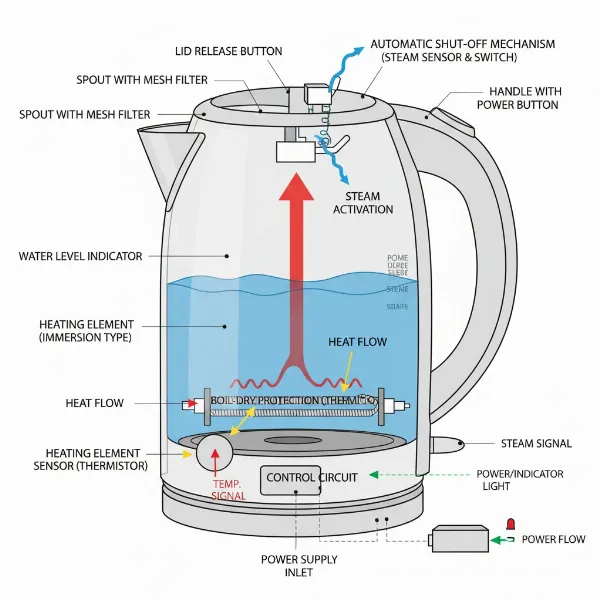 Diagram illustrating internal safety features of an electric kettle, including boil-dry protection sensor and auto-shutoff mechanism, with labels
Maintaining Your Electric Kettle for Optimal Safety
Regular maintenance is crucial not just for extending the lifespan of your electric kettle, but also for ensuring its safety features function correctly. Neglecting basic care can lead to malfunctions that compromise protective mechanisms.
The Importance of Regular Descaling
Scale buildup, common in areas with hard water, can interfere with your kettle’s performance and safety sensors. Limescale can coat the heating element, reducing efficiency, and more importantly, can affect the dielectric properties of sensor surfaces, leading to inaccurate water level detection or delayed shut-off. It is recommended to clean the inside of the kettle monthly using a citric acid solution to remove scale.
Checking for Wear, Tear, and Damage
Periodically inspect your kettle for any visible signs of damage, such as cracks in the body, fraying of the power cord, or a loose base connection. Even minor damage can compromise safety, potentially leading to leaks, electrical shorts, or malfunction of safety features. If you notice any damage, discontinue use immediately and consider replacing the kettle or contacting the manufacturer for advice.
Proper Storage Practices
When not in use for extended periods, such as during vacations, store your electric kettle properly. It’s advisable to store the kettle upside down after ensuring it is completely dry. This prevents residual moisture from corroding internal circuitry, which could lead to electrical issues or affect sensor functionality over time. Always store it in a dry, safe place where it won’t be easily damaged.
What Happens During a Boil-Dry and What to Do
Even with the best precautions and features, accidents can sometimes happen. Knowing how to react if your electric kettle boils dry is crucial for minimizing damage and ensuring safety.
Immediate Steps After a Boil-Dry Incident
If you realize your kettle has boiled dry, or if you notice a burning smell, unusual noises, or smoke, act quickly:
- Unplug Immediately: The very first step is to safely unplug the kettle from the wall socket. Do not touch the kettle body directly, as it will be extremely hot.
- Allow to Cool: Leave the kettle to cool down completely, undisturbed, for at least 15-20 minutes. Do not attempt to add water to a hot, dry kettle, as this could cause a sudden burst of steam or further damage.
- Inspect for Damage: Once cool, thoroughly inspect the kettle for any signs of damage, such as melted plastic, discolored internal components, or a compromised heating element.
When to Replace Your Kettle
After a boil-dry incident, even if the kettle appears to function normally, its long-term reliability and safety may be compromised. The intense heat can stress internal components, leading to hidden damage that might cause future malfunctions, including a failure of the boil-dry protection itself. It is generally recommended to replace an electric kettle that has experienced a boil-dry incident, particularly if there are any visible signs of damage or unusual odors persist. As one expert succinctly put it:
“If your electric kettle has experienced a boil-dry incident, even if it seems to work afterward, the internal components may have been weakened. For peace of mind and continued safety, replacement is often the safest option.”
Frequently Asked Questions
How does boil-dry protection work in an electric kettle?
Boil-dry protection in an electric kettle typically utilizes a thermal sensor or thermostat that detects temperatures exceeding the boiling point of water. If the kettle runs dry, the internal temperature rises rapidly above 100°C, triggering this sensor to automatically cut off power to the heating element, preventing overheating and potential hazards.
Can I use my electric kettle again after a boil-dry incident?
While some kettles might appear to work after a boil-dry incident, it’s generally not recommended to continue using them. The extreme heat can weaken internal components and compromise safety features, leading to unpredictable future malfunctions. For optimal safety, replacing the kettle is the safest course of action.
What are the signs of a faulty electric kettle?
Signs of a faulty electric kettle include unusual noises (like buzzing or excessive clicking), burning smells, steam escaping from places other than the spout, prolonged boiling without shut-off, leaks, or visible damage such as cracks or a frayed cord. If you observe any of these, discontinue use immediately and unplug it.
Is it safe to leave water in an electric kettle?
It is generally safe to leave water in an electric kettle, but it’s not ideal. Stagnant water can lead to limescale buildup more quickly, which can impact efficiency and sensor function. For best practice, only fill the kettle with the amount of water you need and empty any remaining water after use, or at least regularly descale the kettle.
What is the ideal water level for an electric kettle?
The ideal water level for an Electric Kettle is between the clearly marked minimum and maximum fill lines. Filling it to the minimum ensures there’s enough water for the safety features to function correctly, while staying below the maximum prevents boiling over and scalding risks. Always refer to your kettle’s specific markings.