For every dedicated tea enthusiast, the pursuit of the perfect cup is a journey of precision and appreciation. While the quality of tea leaves and brewing time are often meticulously managed, one crucial element often overlooked is the water temperature. Many default to boiling water, unknowingly compromising the delicate nuances of their beloved brew. This is where a variable temperature kettle becomes an indispensable tool, transforming your daily ritual into an art form. It’s more than just an appliance; it’s the gateway to unlocking the full potential of every tea leaf, ensuring each sip delivers an unparalleled experience.
The Science of Tea Brewing: Why Water Temperature Matters
The interaction between tea leaves and water temperature is a sophisticated chemical dance that profoundly affects the final flavor, aroma, and even the health benefits of your brew. Different compounds within tea leaves — such as tannins, catechins, and essential oils — extract best at specific temperatures. Boiling water (212°F or 100°C), while suitable for some hearty teas, can often be too aggressive, scorching delicate leaves and pulling out excessive bitterness from tannins, while simultaneously destroying beneficial nutrients. Conversely, water that isn’t hot enough will fail to extract sufficient flavor, leaving you with a weak, insipid cup.
Consider the diverse world of tea. Green teas, for instance, are particularly sensitive. Brewing them with water that’s too hot can destroy their subtle grassy notes and introduce an unpleasant astringency. White teas, known for their delicate, floral profiles, require an even gentler touch. Oolong teas, with their complex range of oxidation, often thrive in mid-range temperatures, allowing their multifaceted flavors to fully develop. Black teas and robust herbal infusions, however, can generally withstand and even benefit from hotter water, which helps to fully extract their bolder characteristics. Mastering these temperature differences is the first step towards a truly exceptional tea experience.
Beyond Boiling: What a Variable Temperature Kettle Offers
A variable temperature kettle empowers you with the precision needed to honor each tea type, moving beyond the one-size-fits-all approach of a standard boiling kettle. This targeted control brings a host of benefits that significantly enhance your tea ritual.
Flavor Perfection
Table is empty.The most significant advantage of a variable temperature kettle is its ability to unlock the optimal flavor profile of any tea. By allowing you to select the exact temperature, you can prevent the “scorching” that occurs with delicate teas like green and white varieties, which are prone to bitterness when exposed to boiling water. For black teas or herbal infusions, higher temperatures ensure a full, robust extraction without over-extraction. This precision means you taste the tea as it’s meant to be enjoyed – complex, nuanced, and perfectly balanced, free from unwanted astringency or weakness. It transforms your tea from merely “hot” to truly “delicious.”
Preserving Nutrients
Many teas, particularly green and white teas, are rich in beneficial compounds like antioxidants and Vitamin C. High temperatures can degrade these delicate components, diminishing the health benefits you seek from your daily cup. A variable temperature kettle allows you to brew at lower, gentler temperatures, thereby preserving these heat-sensitive nutrients. This means your tea not only tastes better but also retains more of its inherent wellness properties, supporting your health with every carefully prepared infusion.
Unmatched Convenience
Imagine a world where you no longer need to babysit a boiling kettle or guess when the water has cooled to the right temperature. Variable temperature kettles come with pre-set temperature options for common tea types, or even custom settings, accessible at the push of a button. Many models also feature a “keep warm” function, maintaining your desired temperature for a set period, so your water is always ready when you are. This convenience streamlines your morning routine or afternoon tea break, making the process effortless and enjoyable. You simply select your tea type, and the kettle does the rest, allowing you to focus on savoring the moment.
Energy Efficiency
Heating water to a rolling boil every time, even when only a lower temperature is needed, consumes unnecessary electricity. A variable temperature kettle allows you to heat water only to the specific temperature required, significantly reducing energy consumption. This not only lowers your electricity bills but also contributes to a more environmentally conscious household. While the initial investment might be slightly higher than a basic kettle, the long-term savings on energy can make it a smart and economical choice.
Enhanced Water Quality
Over-boiling water for extended periods can lead to de-aeration, resulting in “flat” water that lacks the crispness needed to bring out the best in your tea. A variable temperature kettle heats water precisely to your chosen degree and then shuts off, preventing prolonged boiling. This ensures the water retains its natural oxygen content, which is crucial for a lively and flavorful infusion. Fresh, well-aerated water provides a superior foundation for extracting the intricate aromas and tastes of your tea leaves.
Key Features to Look for in a Variable Temperature Kettle for Tea Lovers
When choosing a variable temperature kettle, specific features can greatly enhance your tea experience. Prioritizing these elements will ensure you find a model that perfectly suits your brewing habits and preferences.
Temperature Presets & Customization: Look for kettles with clearly marked temperature settings corresponding to popular tea types (e.g., green, white, oolong, black, herbal). Advanced models may offer precise digital temperature control, allowing you to select exact degrees. The ability to customize and save your favorite temperatures is a significant convenience for frequent tea drinkers.
Keep Warm Function: This feature is invaluable for those who enjoy multiple cups over a period or are easily distracted. A good keep-warm function will maintain the water at your desired temperature for 30 minutes to an hour, ensuring you always have perfectly hot water ready for your next steep without reheating from cold.
Material Quality: The most common materials are stainless steel, glass, and BPA-free plastic.
- Stainless steel offers durability and heat retention.
- Glass provides an appealing visual aspect, allowing you to watch the water heat, and doesn’t impart any flavors.
- Ensure plastic components that contact water are BPA-free to avoid chemical leaching.
Capacity: Consider your typical usage.
- Individual Use: Smaller capacities (0.8-1 liter) are efficient for one or two cups.
- Family/Entertaining: Larger capacities (1.5-1.7 liters) are better for serving multiple people or making larger batches.
Power and Speed: Kettles with higher wattage (e.g., 1500W or more) will heat water faster. While a variable temperature kettle might take slightly longer to reach boiling compared to some basic models, a good power rating ensures efficient heating to your chosen temperature.
Ergonomics and Pour Spout: While crucial for pour-over coffee, a well-designed spout is also beneficial for tea. A controlled pour minimizes splashing and allows for precise wetting of the tea leaves, which can be particularly important for delicate infusions. Look for a comfortable handle and a balanced design.
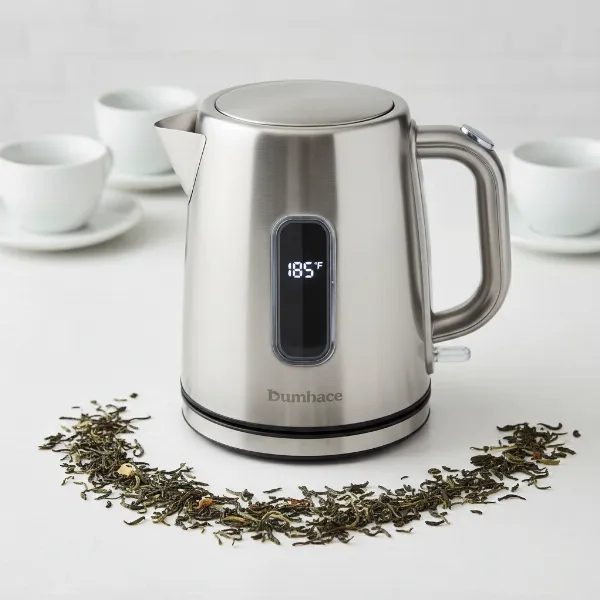 A sleek stainless steel variable temperature kettle with digital display and tea leaves.
Tips for Using Your Variable Temperature Kettle for the Perfect Brew
Once you’ve invested in a variable temperature kettle, a few simple practices will help you consistently brew the perfect cup of tea.
The most crucial tip is to match the water temperature to your specific tea type. Research the ideal brewing temperatures for your favorite teas. For example, delicate white and green teas generally prefer 160-175°F (70-80°C), oolongs perform well at 180-195°F (82-90°C), while black and herbal teas often require 200-212°F (93-100°C). Don’t be afraid to experiment slightly to find your personal preference, but always start with the recommended guidelines.
Always use fresh, filtered water. Tap water can contain impurities or chlorine that negatively impact the taste of your tea. Fresh water also has a higher oxygen content, which, as discussed, is vital for flavor extraction. Fill your kettle with cold, fresh water each time you brew for the best results.
Regular cleaning and descaling of your kettle are essential for maintaining its performance and ensuring pure-tasting water. Mineral deposits (limescale) can build up over time, affecting heating efficiency and potentially altering the taste of your water. Use a descaling solution or a natural remedy like vinegar and water regularly to keep your kettle in pristine condition.
Conclusion
Embracing a variable temperature kettle is a definitive upgrade for any tea lover, transforming the simple act of brewing into a refined ritual. By providing precise control over water temperature, these kettles ensure that every type of tea, from delicate greens to robust blacks, is brewed under optimal conditions, unlocking its full spectrum of flavor and preserving its beneficial compounds. The enhanced convenience, energy efficiency, and superior water quality further cement its status as an essential tool for those who truly appreciate the art of tea. If you’re looking to elevate your daily cup from good to extraordinary, a variable temperature kettle isn’t just a luxury; it’s a necessity. What new tea flavors will you discover with perfect temperature control?
Frequently Asked Questions
What is the ideal temperature for green tea?
Green tea is best brewed at a lower temperature, typically between 160-175°F (70-80°C). This range prevents the delicate leaves from being scorched, which can lead to a bitter taste, and preserves its nuanced grassy and vegetal notes.
Can I use a variable temperature kettle for coffee too?
Absolutely. Many coffee brewing methods, especially pour-over and AeroPress, benefit significantly from precise temperature control. A variable temperature kettle allows you to hit the exact temperature recommended for your roast type and brewing method, enhancing flavor extraction and avoiding over-extraction.
Are variable temperature kettles more energy-efficient than regular kettles?
Yes, they can be more energy-efficient. By heating water only to the specific temperature required (e.g., 175°F for green tea instead of 212°F boiling), they consume less electricity. While the initial cost might be higher, the energy savings can add up over time.
How do I clean a variable temperature kettle?
Regular cleaning involves wiping the exterior and interior with a soft, damp cloth. For descaling, fill the kettle with equal parts white vinegar and water, bring it to a boil (or set to 212°F), let it sit for 15-30 minutes, then rinse thoroughly. Repeat with plain water if any vinegar smell remains.
Is a variable temperature kettle worth the extra cost?
For serious tea enthusiasts and coffee aficionados, the added cost is generally considered a worthwhile investment. The ability to precisely control water temperature dramatically improves the flavor, aroma, and health benefits of your beverages, making the daily brewing experience more satisfying and rewarding.