Few things are as essential in a modern kitchen as a reliable electric kettle. Its ability to quickly heat water for your morning coffee, afternoon tea, or instant meals makes it an indispensable appliance. However, when the crucial auto-shutoff mechanism, a cornerstone of both convenience and safety, begins to malfunction, it can be both frustrating and concerning. Whether your kettle refuses to turn off after boiling or suddenly stops heating prematurely, understanding the underlying issues and knowing how to “reset” or troubleshoot the sensor mechanism is key to restoring its functionality and ensuring safe operation.
This comprehensive guide will demystify the inner workings of your electric kettle’s safety features, explore the most common culprits behind auto-shutoff failures, and provide practical, step-by-step instructions to diagnose and resolve these problems. By the end, you’ll be equipped with the knowledge to bring your kettle back to optimal performance, ensuring perfectly boiled water every time.
Understanding the Electric Kettle Auto-Shutoff Mechanism
The automatic shut-off feature in an electric kettle is a marvel of simple, yet effective, engineering designed to prevent over-boiling and dry heating. Most modern kettles employ two primary safety mechanisms: the boiling point shut-off and boil-dry protection.
The boiling point shut-off typically relies on a steam-activated thermostat, often a bimetallic strip located in the kettle’s base or handle. As water boils, steam rises and is directed through a small tube or channel to this sensor. When the steam reaches the bimetallic strip, the heat causes it to flex, which in turn trips an internal switch, cutting off power to the heating element. This ensures the kettle stops boiling once the water has reached its peak temperature.
Boil-dry protection, a separate and equally vital safety feature, prevents damage to the heating element if the kettle is accidentally switched on with insufficient water or no water at all. This mechanism usually involves a thermal fuse or thermostat positioned directly beneath the heating element. If the element’s temperature rises dangerously due to the absence of water, this sensor will automatically cut off power, safeguarding the appliance and preventing potential fire hazards. This system typically resets itself once the kettle has cooled down, allowing it to function normally again.
Common Reasons Your Electric Kettle Auto-Shutoff Fails
When your electric kettle’s auto-shutoff mechanism acts up, it’s often due to one of several common issues. Understanding these can help you pinpoint the problem and apply the correct solution.
The most frequent culprit behind a kettle that fails to shut off after boiling is limescale buildup. Hard water contains minerals that, when heated, deposit as limescale inside the kettle. This buildup can clog the delicate steam tube that channels steam to the bimetallic strip, preventing the sensor from accurately detecting the boiling point. Consequently, the kettle continues to boil indefinitely. Limescale can also insulate the heating element, causing it to overheat before the water boils properly, confusing the internal sensors.
Another significant cause is a faulty thermostat or switch. Over time, the bimetallic strip can lose its responsiveness, or the internal electrical switch it activates can wear out or become damaged. This mechanical failure prevents the auto-shutoff from engaging, regardless of proper steam detection.
Improper lid closure can also lead to issues. If the kettle’s lid isn’t securely closed, steam can escape from the top instead of being directed to the internal sensor. Without enough steam reaching the bimetallic strip, the kettle won’t register that the water has boiled and will continue heating.
Occasionally, overfilling the kettle can interfere with the steam path. If water levels are too high, water might enter the steam tube, obstructing the steam flow to the sensor and preventing proper shut-off. Always adhere to the maximum fill line indicated on your kettle.
Finally, if your kettle is not turning on or shuts off too soon, the boil-dry protection may have been activated. This isn’t a malfunction but a safety response. If the kettle ran dry, it will automatically cut power and will not operate again until it has cooled down sufficiently.
Step-by-Step Guide to Resetting and Troubleshooting the Auto-Shutoff
When your electric kettle’s auto-shutoff sensor isn’t working as expected, a systematic approach to troubleshooting can help you identify and resolve the issue.
Safety First: Always Unplug and Cool Down
|
Our Picks for the Best Electric kettle in 2026
As an Amazon Associate I earn from qualifying purchases.
|
||
| Num | Product | Action |
|---|---|---|
| 1 | OVENTE Electric Kettle, 1.7L Fast Boiling Water Heater for Coffee or Tea, BPA Free with Water Level Gauge, Auto Shut-Off, Boil-Dry Protection, Indicator Light and Removable Filter, White KP72W |

|
| 2 | Chefman Electric Kettle, 1.8L 1500W, Hot Water Boiler, Removable Lid for Easy Cleaning, Auto Shut Off, Boil-Dry Protection, Stainless Steel Filter, BPA Free, Borosilicate Glass Electric Tea Kettle |
|
| 3 | Mueller Rapid Boil Electric Tea Kettle 1.8L – Borosilicate Glass & Stainless Steel – BPA-Free Hot Water Boiler, LED Light, Auto Shut-Off, Boil Dry Protection Fast Water Heater – Kitchen Appliances |
|
| 4 | Amazon Basics Electric Stainless Steel Kettle for Tea and Coffee, BPA-Free, Fast Boiling, Auto Shut-Off, 1 Liter, 1500W, Black and Silver |
|
| 5 | OVENTE Electric Kettle, 1.5L Borosilicate Glass Countertop Water Heater and Boiler for Coffee or Tea, BPA-Free, Auto Shut-Off, Boil-Dry Protection, Removable and Washable Spout Filter, Black KG83B |
|
| 6 | Cuisinart PerfecTemp 1.7-Liter Electric Kettle, Cordless Electric Tea Kettle, 1500W for Fast Heat-Up, 6 Preset Temperatures, 30-Minute Keep Warm, Stay Cool Nonslip Handle, CPK-17P1 |
|
| 7 | Cosori Electric Kettle, No Plastic Contact With Water, Wide Mouth For Easy Cleaning, Auto Shut Off, 1.7L Tea Kettle & Hot Water Boiler, Water Heater & Teapot, Borosilicate Glass, Black, 1500W |
|
| 8 | Chefman Electric Kettle with Temperature Control, 5 Presets LED Indicator Lights, Removable Tea Infuser, Glass Tea Kettle & Hot Water Boiler, 360° Swivel Base, BPA Free, Stainless Steel, 1.8 Liters |
|
| 9 | Chefman Electric Kettle with Tea Infuser, Compact 1L (4 Cups), 1500W, Removable Lid for Easy Cleaning, Boil-Dry Protection, Stainless Steel Filter, BPA Free, Auto Shut Off, Small Electric Tea Kettle |
|
| 10 | Amazon Basics Electric Kettle with Glass Carafe for Tea and Coffee, Fast Boiling, Auto Shut-Off, Boil-Dry Protection, Temperature Control, Removable Filter, 1 Liter, 1500W, BPA-Free |
|
Before attempting any troubleshooting or maintenance, always unplug your electric kettle from the power outlet and allow it to cool completely. This crucial step prevents the risk of electric shock and burns. Never open or dismantle your kettle while it’s connected to power.
Check Basic Connections
Start with the simplest checks. Ensure the kettle is properly seated on its power base and that the power cord is securely plugged into a working wall outlet. Test the outlet with another appliance to rule out a power supply issue. Confirm that the kettle’s lid is securely closed. A loose lid is a common reason for auto-shutoff failure as it allows steam to escape, preventing it from reaching the sensor. Listen for a “click” sound when closing the lid, indicating a proper seal.
The “Reset” for Boil-Dry Protection: A Simple Cool-Down
If your kettle suddenly stopped working or won’t turn on after boiling dry, it’s likely the boil-dry protection has activated. In most cases, there isn’t a manual button to “reset” this specific feature. The solution is straightforward: unplug the kettle and let it cool down for at least 10 to 15 minutes. This allows the internal thermal switch to passively reset. Once cool, refill the kettle with water and try again.
Descaling: The Most Common Solution
Limescale buildup is the number one enemy of a properly functioning auto-shutoff. Regular descaling can often resolve issues where the kettle fails to shut off.
- Why it works: Descaling removes mineral deposits that can clog the steam tube leading to the bimetallic sensor, allowing steam to reach it freely. It also improves heat transfer, ensuring the kettle boils efficiently and accurately.
- How to descale:
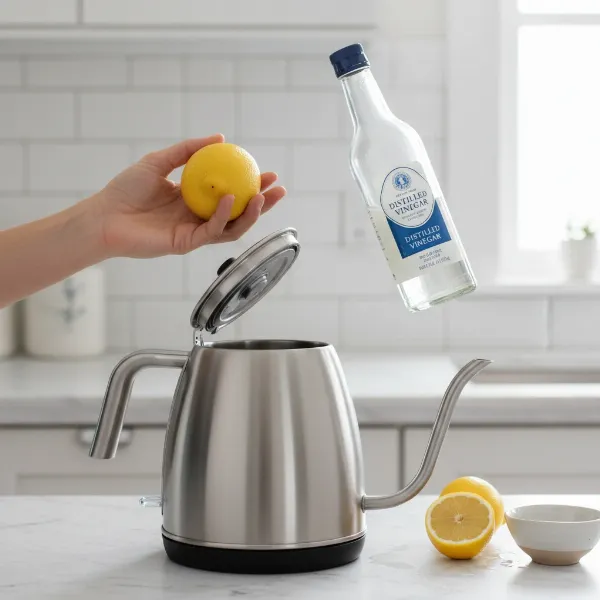
- Vinegar Solution: Fill the kettle halfway with equal parts white vinegar and water. Bring it to a boil, then unplug and let it sit for at least 30 minutes, or longer for heavy buildup. For severe scale, you can let it sit overnight. Afterward, empty the kettle and rinse it thoroughly several times with fresh water to remove any vinegar residue. Boil fresh water a few times and discard it to eliminate any lingering vinegar smell.
- Lemon Juice: Similar to vinegar, use a solution of water and a few tablespoons of lemon juice (or sliced lemons). Boil, let it sit, then rinse.
- Commercial Descalers: Follow the manufacturer’s instructions for specialized kettle descaling products. These are often effective for stubborn buildup.
Inspect the Lid and Gasket
After descaling, closely examine the lid and its rubber or silicone gasket (seal). Ensure the gasket is intact, flexible, and free from cracks or debris. A damaged or hardened gasket can prevent a tight seal, allowing steam to escape and affecting the auto-shutoff. Some lids have small vents or steam channels that can also become clogged; clear these gently with a small brush or toothpick if accessible.
Check for Obstructions in the Steam Tube
For some kettles, you might be able to visually inspect the steam tube or channel that directs steam to the sensor. This is usually a small opening or passage near the top inside the kettle or within the handle assembly. If you spot any visible blockage from limescale or debris, gently try to clear it using a small, non-metallic tool like a soft brush or a cotton swab, but be very careful not to damage any internal components.
Advanced Troubleshooting (Use with Caution)
If the above steps don’t resolve the issue, the problem might be a faulty internal component, such as the bimetallic switch itself or damaged wiring.
Warning: Opening your electric kettle voids most warranties and carries a risk of electric shock. Only proceed if you have experience with appliance repair and electrical safety, and are comfortable using tools like a multimeter.
- Checking the Switch/Thermostat: This typically involves disassembling the kettle’s base to access the internal switch and thermostat. With a multimeter set to continuity mode, you can test if the switch is opening and closing correctly when manually engaged or when heated (for the bimetallic strip). If there’s no continuity when it should be present, or vice versa, the component is likely faulty.
- Inspecting Wiring: Look for any loose, burnt, or corroded wires connecting to the switch or heating element. Re-securing loose connections or trimming and reattaching damaged wires might solve the issue.
These types of repairs often require specialized knowledge and soldering skills. If you’re unsure, it’s safer to consult a professional or consider replacement.
When to Consider Replacement
While troubleshooting can fix many common electric kettle problems, there comes a point when replacement is the more practical and safer option. Consider buying a new kettle if:
- Repeated Failures: Despite your best efforts, the auto-shutoff repeatedly malfunctions.
- Extensive Damage: You notice visible cracks, significant corrosion, or burnt internal components.
- Age of the Kettle: Older kettles, especially those over 5-7 years old, may have internal components that are simply worn out and less efficient.
- Cost of Repair vs. Replacement: If a professional repair is expensive or if you’d need to buy specialized tools and parts, a new, often inexpensive, kettle might be a more economical choice. Modern kettles also offer improved safety features and energy efficiency.
Safety should always be your top priority. An electric kettle with a consistently failing auto-shutoff mechanism poses a fire risk if left unattended.
Maintaining Your Electric Kettle for Optimal Performance
Preventative maintenance is the best way to ensure your electric kettle’s auto-shutoff mechanism continues to function reliably for years to come.
- Regular Descaling: This is paramount, especially if you live in an area with hard water. Aim to descale your kettle once a month, or every few weeks if you use it frequently or notice rapid scale buildup. Consistent descaling keeps the steam channels clear and the heating element efficient.
- Proper Filling: Always fill the kettle between the minimum and maximum fill lines. Overfilling can lead to water entering the steam tube, while underfilling can trigger the boil-dry protection unnecessarily.
- Empty After Use: Although not strictly necessary for all models, emptying residual water after each use can help reduce mineral deposits, especially if you won’t be using the kettle for a while.
- Clean Exterior: Keep the exterior of your kettle and its power base clean and dry to prevent electrical issues.
- Gentle Handling: Avoid dropping or roughly handling the kettle, as this can damage internal sensors or connections.
Conclusion
A malfunctioning auto-shutoff sensor in your electric kettle can be a nuisance, but often, the solution is simpler than you might think. By understanding how these safety mechanisms work and systematically troubleshooting common issues like limescale buildup or a triggered boil-dry sensor, you can often restore your kettle to its full functionality. Regular descaling and mindful usage are your best tools for preventing future problems, ensuring that your kettle remains a safe, efficient, and long-lasting kitchen companion.
Remember, safety is paramount. If basic troubleshooting doesn’t work, or if you suspect a serious electrical fault, it’s always best to consult a professional or consider replacing the appliance. With a little care and attention, your electric kettle will continue to provide perfectly boiled water, enhancing your daily routines.
What’s your go-to method for keeping your electric kettle sparkling clean and working flawlessly?
Frequently Asked Questions
Can I manually reset my kettle’s auto-shutoff?
Most electric kettles do not have a manual “reset” button for the boiling point auto-shutoff sensor. The mechanism relies on steam detecting boiling water and passively resets when it cools. For boil-dry protection, simply unplugging the kettle and allowing it to cool down for 10-15 minutes will usually reset it automatically.
How often should I descale my kettle?
The frequency of descaling depends on your water hardness and how often you use the kettle. For hard water areas or daily use, descaling once a month is recommended. If you notice visible limescale buildup or a slower boiling time, it’s time to descale.
What is boil-dry protection?
Boil-dry protection is a safety feature that automatically turns off the kettle if it detects that there is no water inside or insufficient water, preventing the heating element from overheating and potential damage or fire hazards. It’s a crucial safety mechanism.
Is it safe to use a kettle if the auto-shutoff isn’t working?
No, it is generally not safe to use an electric kettle if the auto-shutoff mechanism is consistently failing. This feature is designed to prevent over-boiling, which can lead to dry boiling, overheating, and potentially a fire hazard if the kettle is left unattended. You should troubleshoot and fix the issue or replace the kettle.